Best crypto to pay with online: Bitcoin, Monero or USDT
Real October 2026 fees, confirmation times, privacy and freeze risk for Bitcoin, Monero, USDT, USDC and Litecoin, and which coin to pick for each priority.

Key takeaways
- USDC or USDT on Solana or Base was the cheapest way to pay without price risk in October 2026, at about a cent or less per transfer.
- USDT on Tron burns about 6.5 TRX (around $2.18) when sent from your own wallet; it is cheap only when an exchange sends it for a flat 1 USDT.
- Bitcoin on-chain fees have sat near 1 sat/vB for most of the past year, so paying in BTC costs cents.
- Monero is the only option here that hides sender, receiver and amount by default, while Tether and Circle can freeze stablecoin addresses.
- Most payment problems come from the wrong network, an exchange fee deducted from the amount, or a missing tag or memo.
For most online orders, the best crypto to pay with is a dollar stablecoin on a cheap, fast network: USDC or USDT on Solana or Base costs a cent or less to send, settles in seconds, and the amount you owe can't drift while you pay. Choose Monero when you don't want the purchase on a public ledger, and Bitcoin when that's simply what you hold, because on-chain fees have sat near their floor for most of the past year. USDT on Tron is still many people's default, but sent from your own wallet it now costs about $2.18, more than anything else in this comparison.
How the main options compare
We checked every figure below on 5 October 2026. Fees are network fees for one ordinary transfer from a wallet you control, converted at that morning's CoinGecko prices (BTC $85,932, ETH $2,711, SOL $120.42, TRX $0.335, XMR $545, LTC $70.24). They move with demand, so read them as a snapshot rather than a quote.
| Coin and network | Typical fee (5 Oct 2026) | Blocks and settlement | Price risk while paying | On-chain privacy | Issuer can freeze |
|---|---|---|---|---|---|
| Bitcoin, on-chain | About $0.03 median, at 1 sat/vB | ~10 min blocks; stores wait 1 to 6 confirmations | Yes | Public | No |
| Monero | About $0.02 (median 0.0000445 XMR) | ~2 min blocks; spendable after ~20 min | Yes | Hidden by default | No |
| USDT on Tron | About $2.18 (6.5 TRX) from your wallet; ~1 USDT from most exchanges | 3 s blocks; final in about a minute | No | Public | Yes |
| USDT or USDC on Ethereum | Under 1 cent for ETH; a few cents at most for tokens | 12 s slots; final in ~13 min | No | Public | Yes |
| USDT or USDC on Solana | About $0.0006, plus ~$0.25 if the recipient needs a token account | 0.4 s slots; finalized within seconds | No | Public | Yes |
| USDC on Base | Around a cent or less | 2 s blocks | No | Public | Yes |
| Litecoin | About $0.0006 median | ~2.5 min blocks | Yes | Public | No |
What a payment actually costs in fees
Bitcoin on-chain
On the morning of 5 October, mempool.space recommended 1 sat/vB at every priority level, and Blockchair put the median Bitcoin transaction fee over the previous 24 hours at about $0.03 (the average, $0.24, is pulled up by large transactions). This isn't a one-day dip. Across the last 12 months of mempool.space block fee data, the median fee rate in mined blocks stayed around 1 to 2 sat/vB, and the busier stretches only pushed it into single digits. Fees still climb when blocks fill, so look at the estimate before you send instead of trusting your wallet's default.
USDT on Tron: cheap from an exchange, not from your wallet
Tron's reputation for near-free USDT is out of date. A USDT transfer consumes energy, and if your wallet has none staked or rented, it burns TRX to cover it. After TRON governance cut the energy price in August 2025, a standard transfer burns about 6.5 TRX, roughly $2.18 today, and about 13.1 TRX ($4.39) if the receiving address has never held USDT, according to TronAgg's August 2026 breakdown. Renting energy first brings that down to 2.6 to 3.9 TRX. Withdrawing straight from a large exchange usually costs a flat 1 USDT instead, because the exchange signs and pays for the transaction.
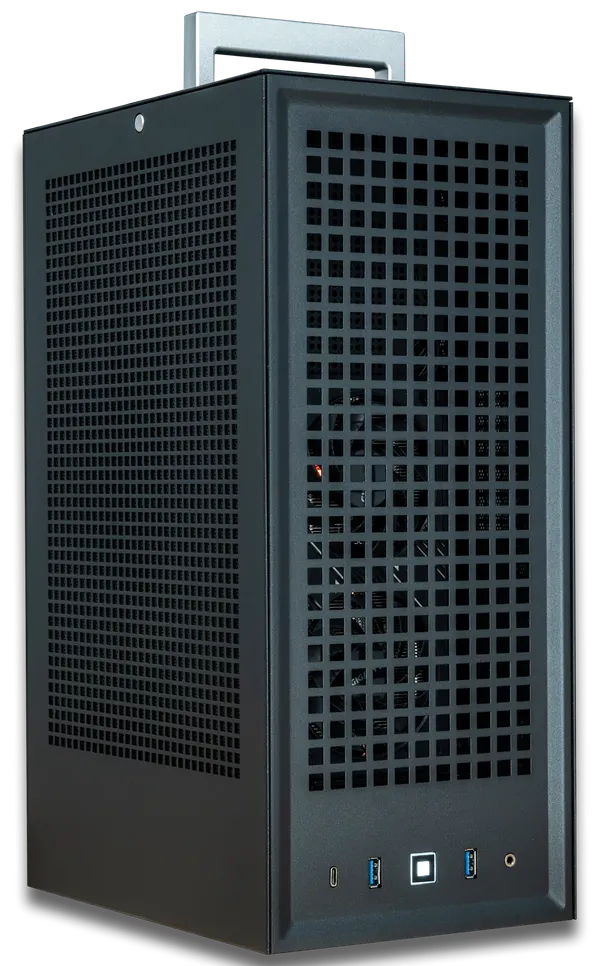
On a $1,299.99 order such as the CG Mini RX 9060 XT gaming PC (price at the time of writing), $2.18 is 0.17% of the total, and on our $399 minimum order it's about 0.5%. Small, but there's no reason to pay it if you hold the same dollars on Solana or Base.
Ethereum, Base and Solana
Ethereum mainnet is cheap at the moment too. Etherscan's gas tracker read 0.079 gwei on 5 October, which it prices at under half a cent for a plain ETH transfer. Token transfers use more gas, and Blockchair's median fee across all Ethereum transactions that day was about $0.05, so a USDT or USDC payment lands somewhere between the two.
Base, an Ethereum layer 2, has a floor base fee of 0.005 gwei. Its documentation says that works out to about $0.002 for a 200,000-gas transaction at $2,000 ETH, plus a separate L1 data fee that is usually the larger part. In normal conditions a USDC transfer on Base comes to around a cent or less. On Solana, the base fee is 5,000 lamports per signature according to the Solana fee documentation, about $0.0006, plus an optional priority fee. One catch: if the receiving address has never held that token, your wallet also pays about 0.002 SOL, roughly $0.25, to open a token account for it.
Litecoin and Monero
Litecoin is as cheap as Solana: Blockchair's median Litecoin fee for the 24 hours to 5 October was $0.0006. Monero costs a little more. Across the 218 transactions in the ten most recent blocks on the xmrchain.net explorer that morning, the median fee was 0.0000445 XMR, about two cents.
Speed: block times and when a store credits you
Speed has two parts: how often the network produces blocks, and how many confirmations a merchant waits for before treating the payment as final. BTCPay Server's documentation describes merchants setting a minimum of usually 1 to 6 confirmations for on-chain Bitcoin. By network:
- Bitcoin: about one block every 10 minutes, so 10 minutes to an hour for 1 to 6 confirmations.
- Litecoin: a block roughly every two and a half minutes (Blockchair counted 639 in the 24 hours to 5 October).
- Monero: a block about every 2 minutes. Received funds typically become spendable after 10 confirmations, around 20 minutes.
- Tron: a block every 3 seconds. TRON's developer docs say a transaction is final once its block is solidified, which typically takes about a minute.
- Ethereum: 12-second slots, with finality after roughly two 32-slot epochs, close to 13 minutes.
- Base: 2-second blocks, with 200-millisecond preconfirmations.
- Solana: 400-millisecond slots. A transaction is confirmed within a few slots and finalized about 13 seconds behind that.
Lightning, Bitcoin's payment-channel layer, settles without waiting for on-chain confirmations. It only helps if the store shows a Lightning invoice at checkout, and not every store offers one. If you don't see the option, an on-chain payment at current fees costs cents and works fine.
Price swings while you pay
When you pay in BTC, XMR, ETH, SOL or LTC, the store converts a dollar price into a crypto amount. Your exposure runs from the moment you buy or set aside the coins until the payment lands. Bitcoin moved 1.3% in the 24 hours before we wrote this. On a $1,799.99 order like the Cinder RTX 5060 Ti gaming PC (price at the time of writing), a 2% move is $36 either way, which is more than every network fee in the table combined.
Stablecoins remove that variable: 1,299.99 USDC is still worth about $1,299.99 whenever it arrives. The same logic carries into refunds. We refund in the same coin at the order's USD value (see returns), so a stablecoin buyer gets back roughly the number of tokens they sent, while a Bitcoin buyer gets the dollar value back in BTC, which may be more or fewer coins than they paid.
Privacy: public ledgers versus Monero
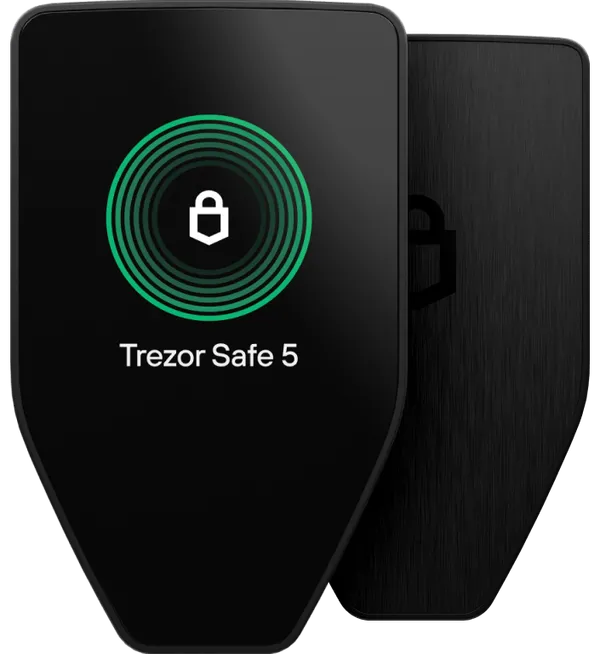
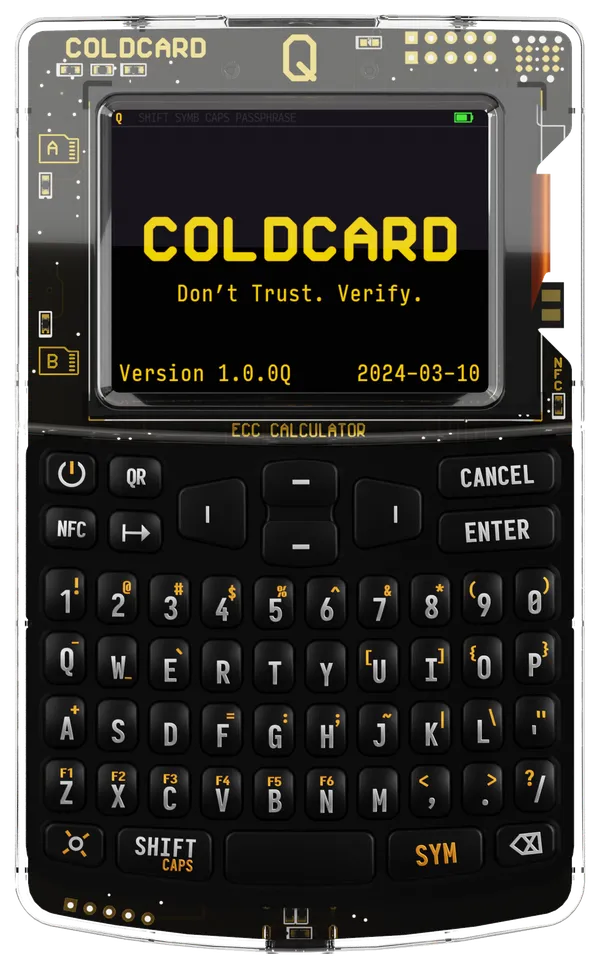
Bitcoin, Litecoin, Ethereum, Solana, Base and Tron are public ledgers. Anyone who learns one of your addresses can see what you sent, when, and where the coins came from. If you withdraw from a verified exchange account straight to a store, the exchange holds a record linking your identity to that purchase. Stablecoins are no exception: USDT on Tron is as traceable as Bitcoin. Paying from your own wallet, ideally a hardware wallet such as the Trezor Safe 5 ($169) or the Bitcoin-only Coldcard Q ($289, both at the time of writing), keeps the payment out of an exchange's records, though the transaction itself is still public.
Monero is private by default. Its official FAQ explains that ring signatures, ring confidential transactions (RingCT) and stealth addresses hide the sender, the amount and the receiver, and that there is no way to send a transparent transaction by accident. The same FAQ warns that a remote node operator can see the IP address a transaction comes from, so use Tor, I2P or a node of your own. On the Bitcoin side, a home node such as the Start9 Server One ($899 at the time of writing) lets your wallet broadcast and check payments without asking someone else's server.
The trade-off with Monero is access. Binance delisted XMR in February 2024, and Kraken halted XMR trading and deposits for clients in the European Economic Area on 31 October 2024, citing regulatory changes (Kraken support). The EU's Anti-Money Laundering Regulation, which applies from 10 July 2027, bars crypto service providers from keeping accounts that allow anonymity-enhancing coins, although it doesn't regulate individuals who hold them. Expect buying XMR through a regulated European exchange to stay difficult.
Stablecoins can be frozen by their issuers
Bitcoin, Monero and Litecoin have no issuer who can stop a transfer. USDT and USDC do. Tether can blacklist an address on its USDT contracts, after which the USDT at that address can't be moved. In April 2026, Tether said its work with more than 340 law enforcement agencies in 65 countries had led to freezes of more than $4.4 billion in assets. BlockSec's freeze tracker counted 9,597 blacklisted USDT addresses holding $5.69 billion as of 26 July 2026, most of it on Tron, and found that only 3.6% of addresses frozen in 2025 were later released. Circle's USDC terms reserve the right to block transfers of USDC to and from an address under its blocklisting policy.
For an ordinary buyer the practical risk is low, because these freezes target sanctions, scams and stolen funds. It is still a different trust model. If an issuer's power to freeze your money is the thing you want to avoid, pay in BTC, XMR or LTC, and don't park large balances in a stablecoin wallet.
Mistakes that leave a payment short or lost
- Wrong network. USDT on Tron, Ethereum, Solana and BSC are separate tokens on separate chains. Pick the network shown on the order page, not the one your exchange defaults to. MetaMask's support pages explain that the same address exists on every EVM chain, so tokens sent over the wrong EVM network can usually be recovered if the recipient cooperates, while tokens sent to an address on a non-EVM chain are likely gone for good.
- Letting an exchange take its fee out of the amount. Exchanges typically deduct the withdrawal fee from the sum you enter, so the payment arrives short. BTCPay Server's invoice documentation names this as a common cause of partial payments. Enter the order amount plus the fee, and check the amount that will actually arrive before you confirm.
- Splitting the payment. Two transfers that add up to the right total are harder to match than one. Send the full amount in a single transaction.
- Forgetting a destination tag or memo. On XRP, a payment to a shared address uses a destination tag to say who paid. The XRP Ledger docs note that without it the recipient can't tell which customer to credit, and an address that requires tags will reject the payment outright. If an order page shows a tag or memo, copy it exactly.
- No gas token in the wallet. Sending USDT on Tron from your own wallet needs TRX for the fee, and a wallet that runs out fails the transfer. TronAgg suggests keeping at least 7 TRX for a standard send. USDC on Solana needs a little SOL; on Base and Ethereum, a little ETH.
Which coin to pick for your priority
- Lowest fee: USDC or USDT on Solana, USDC on Base, or Litecoin. Each costs a fraction of a cent to about a cent. Bitcoin on-chain is close behind at current fee rates.
- Fastest: Solana, then Base, then Tron. Bitcoin takes longest to reach the confirmations a store waits for.
- Most private: Monero, sent from your own wallet over Tor or your own node. At our store, Monero payments are checked by hand, usually within a few hours, so allow for that in your timeline.
- No volatility: USDC or USDT. Prefer Solana or Base over Tron unless you're withdrawing directly from an exchange that charges a flat 1 USDT, and then mind the fee deduction.
- No issuer who can freeze funds: Bitcoin, Monero or Litecoin.
If Bitcoin is all you hold, don't convert it just to save a few cents in network fees. The spread and fees on a swap usually cost more than today's on-chain fee. We'd only steer a Bitcoin holder elsewhere if fees spike, or if keeping the purchase off a public ledger matters more than convenience. For keys you'll pay from, our self-custody collection has the wallets mentioned above, shipped factory-sealed.
A quick checklist before you send
- Copy the exact amount from the order page, including the tiny unique offset that identifies your order, and send it in one transaction.
- Match both the coin and the network to the order page. USDT on Tron is not USDT on Ethereum.
- Add the network fee on top, since the sender pays it. From an exchange, make sure the amount that arrives equals the order amount.
- Keep a little TRX, SOL or ETH in the wallet if you're paying with a stablecoin from self-custody.
- Copy any destination tag or memo the order page shows.
- Check the current Bitcoin fee rate before sending; a rate of 1 to 2 sat/vB has been enough for most of the past year.
- Pay within 48 hours, before the unpaid order expires, and keep your order code. It is your receipt.
Step-by-step instructions for every coin we accept, including USDT and USDC on Tron, Ethereum, Solana, BSC, Polygon and Base, are on the how to pay page.
Questions and answers
What is the cheapest crypto to pay with online?
On 5 October 2026, Litecoin and USDC or USDT on Solana cost well under a cent per transfer, and USDC on Base about a cent or less. Bitcoin on-chain cost a few cents at 1 sat/vB, while USDT on Tron cost about $2.18 from a wallet without energy.
Why does a USDT TRC20 transfer cost around 6.5 TRX?
A USDT transfer on Tron uses about 65,000 energy, and a wallet with no staked or rented energy burns TRX to pay for it, about 6.5 TRX at the current energy price. Sending to an address that has never held USDT roughly doubles that.
Is paying with Monero anonymous?
Monero hides the sender, receiver and amount on-chain by default, so the payment doesn't sit on a public ledger. The store still knows what you ordered and where it ships, and a remote node can see your IP address unless you use Tor or your own node.
Can Tether or Circle freeze my stablecoins?
Yes. Tether can blacklist addresses on its USDT contracts and Circle can block USDC addresses under its blocklisting policy. Freezes target sanctions, scams and stolen funds, so the risk to an ordinary buyer is low, but Bitcoin and Monero have no issuer who can do this.
What happens if my crypto payment arrives short?
A short payment, often caused by an exchange deducting its withdrawal fee, won't match the order's exact amount. Contact the store with your order code and transaction ID, and next time add the fee on top so the full amount arrives in one transaction.
Sources
- mempool - Bitcoin Explorer (fee estimates)mempool.space
- Bitcoin block fee rates, 1 yearmempool.space
- Bitcoin blockchain statisticsBlockchair
- Litecoin blockchain statisticsBlockchair
- Ethereum blockchain statisticsBlockchair
- Ethereum Gas TrackerEtherscan
- USDT TRC20 Transfer Fee: Who Pays What in 2026TronAgg
- Consensus and DPoSTRON Developer Hub
- Transaction lifecycleTRON Developer Hub
- FeesSolana Documentation
- Create a Token AccountSolana Documentation
- Transaction confirmation and expirationSolana Developers
- Network FeesBase Documentation
- Block BuildingBase Documentation
- Proof-of-stake (PoS)ethereum.org
- Monero FAQThe Monero Project
- Ring CT (Moneropedia)The Monero Project
- Monero transaction confirmation timemonero.how
- Monero blockchain explorerxmrchain.net
- Support for Monero (XMR) in EuropeKraken
- Monero to Be Delisted From Binance on February 20thTradingView (Coindar)
- AMLR crypto rules: what CASPs must verify from July 2027Didit
- Tether Supports Freeze of More Than $344 Million in USDT in Coordination with OFAC and U.S. Law EnforcementTether
- USDT Freeze 2026: Who's Frozen, How to Check, Live DataBlockSec
- USDC TermsCircle
- InvoicesBTCPay Server Docs
- Store FAQBTCPay Server Docs
- Source and Destination TagsXRP Ledger Docs
- I sent crypto to the wrong placeMetaMask Help Center
- Cryptocurrency prices (BTC, ETH, SOL, TRX, XMR, LTC)CoinGecko
Prices, fees and specifications were checked on October 5, 2026 and change over time. Product prices are ours at the time of writing.