Solo bitcoin mining at home in 2026: what a Bitaxe can really do
At October 2026 difficulty a 1.2 TH/s Bitaxe has about a 1 in 15,000 yearly shot at a block. The odds, power costs and pools for three home miners, worked out.
Key takeaways
- At 132.7 T difficulty, a 1.2 TH/s Bitaxe Gamma has about a 1 in 15,000 chance of a block per year; a 6 TH/s Avalon Nano 3S about 1 in 3,000.
- At $0.15/kWh none of the three miners covers its electricity in expected value; break-even is about $0.11/kWh for the Bitaxe and NerdQaxe++ and $0.07 for the Avalon.
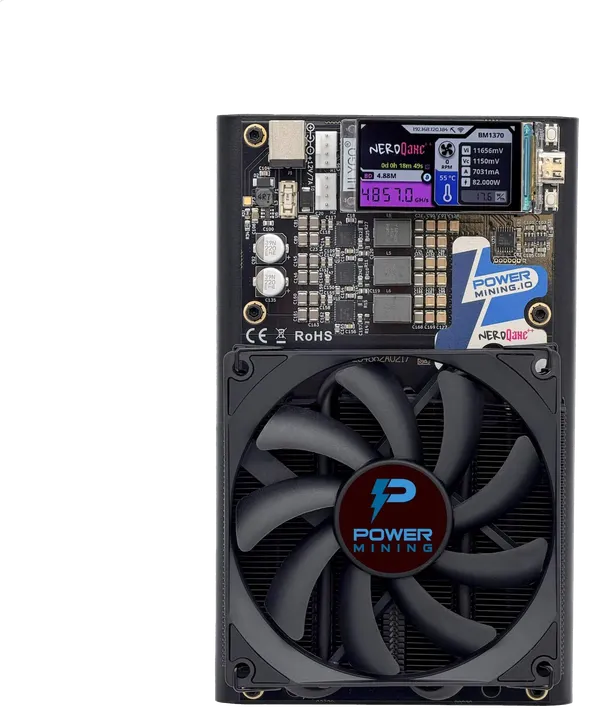
- The NerdQaxe++ is rated at about 4.8 TH/s and 76 W by its designer; 6 TH/s figures are overclocked.
- CKPool solo takes 2% only if you win; Public Pool is free and can run on your own node.
- A home node is useful every day, and pointing a small miner at it gives fee-free solo mining.
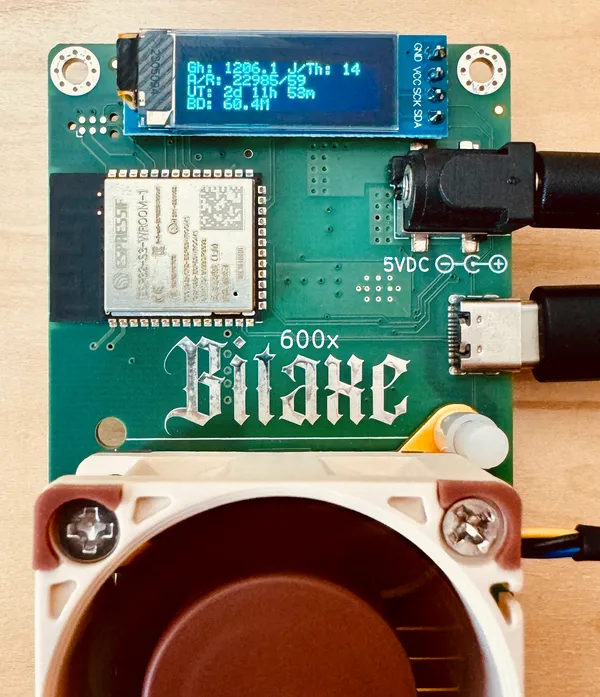
A Bitaxe Gamma hashing at 1.2 TH/s has about a 1 in 15,000 chance of finding a Bitcoin block in a year at current difficulty. A NerdQaxe++ (about 4.8 TH/s) gets to roughly 1 in 3,800 and an Avalon Nano 3S (6 TH/s) to about 1 in 3,000. None of them covers its electricity in expected value at $0.15/kWh, so buy one as a cheap and honest lottery ticket, a learning tool or a small heater, and if you want hardware that earns its keep every day, put a node next to it.
The inputs as of 5 October 2026
Solo odds depend on one network number: difficulty. On 3 October 2026, at block 969,696, difficulty adjusted to 132.72 trillion, a 0.03% drop, according to mempool.space. That implies a network hashrate of about 950 EH/s. Mempool's daily estimates over the past week ranged from roughly 870 to 1,090 EH/s, which is normal noise, and the next adjustment is projected for around 17 October with a drop of about 2.6%.
The prize is the block subsidy plus transaction fees. The subsidy has been 3.125 BTC since block 840,000 in April 2024 and halves to 1.5625 BTC at block 1,050,000, expected in 2028 (Bitcoin Wiki). Fees in recent solo-mined blocks added between 0.013 and 0.024 BTC. At $86,005 per BTC on 5 October (mempool.space price feed), a 3.14 BTC block is worth about $270,000.
The formula behind the odds
Each hash has about a 1 in (D × 2^32) chance of producing a valid block, where D is the difficulty. Multiply by the number of hashes you make in a period and you get the expected number of blocks:
expected blocks = hashrate × seconds ÷ (difficulty × 4,294,967,296)
For a 1.2 TH/s Bitaxe over one day: 1.2 × 10^12 × 86,400 ÷ (132.72 × 10^12 × 4.295 × 10^9) = 0.00000018, or about 1 in 5.5 million. The chance of at least one block in a period is 1 − e^(−expected blocks), which for numbers this small is practically the same figure. Over a full year that gives 1 in 15,000, and per individual block about 1 in 790 million. Some guides print odds in the hundreds of billions per block; that is a units slip, off by a factor of a thousand.
Two consequences follow. Your odds don't improve with time served: a Bitaxe that has hashed for three years has exactly the same chance tomorrow as a new one. And your odds track difficulty, not the bitcoin price. Price only changes what the prize is worth.
Odds and running costs for three home miners
The table uses the designers' and manufacturer's rated figures, difficulty of 132.72 T, $0.15/kWh, round-the-clock operation and a 3.14 BTC block at $86,005. Expected value is the prize multiplied by the yearly odds, before any pool fee.
| Device | Rated hashrate and power | Chance of a block per day | Chance per year | Electricity per year at $0.15/kWh | Expected value per year |
|---|---|---|---|---|---|
| Bitaxe Gamma 602 | 1.2 TH/s, about 18 W | 1 in 5.5 million | 1 in 15,000 | $24 | $18 |
| NerdQaxe++ | 4.8 TH/s, about 76 W | 1 in 1.4 million | 1 in 3,800 | $100 | $72 |
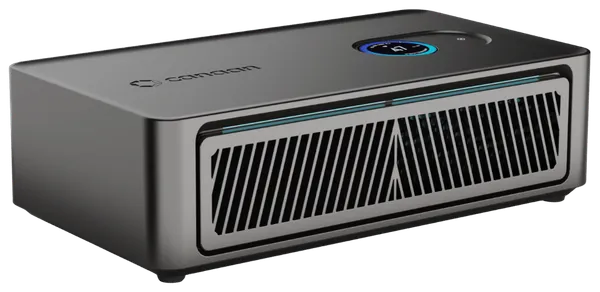
| Avalon Nano 3S | 6 TH/s, 140 W | 1 in 1.1 million | 1 in 3,000 | $184 | $90 |
| Ten Bitaxe Gammas | 12 TH/s, about 180 W | 1 in 550,000 | 1 in 1,500 | $237 | $179 |
Where the specs come from: the bitaxeGamma repository (one BM1370 chip, about 1.2 TH/s, close to Bitmain's 15 J/TH claim, which is where the 18 W comes from; owners report 14 to 18 W), the NerdQAxe hardware repository (about 4.8 TH/s at about 76 W) and Canaan's Nano 3S page (6 TH/s from 12 chips, 140 W adapter). Electricity is watts × 8,760 hours ÷ 1,000 × $0.15. Our prices at the time of writing: Bitaxe Gamma 602 $77, NerdQaxe++ $382, Avalon Nano 3S $300.
What the table tells you
- Break-even power price. The Bitaxe and the NerdQaxe++ cover their electricity in expected value only below about $0.11/kWh, the Avalon below about $0.07/kWh. The Avalon has the most hashrate of the three, but at 23.3 J/TH it burns more power per ticket than the two BM1370 boards at roughly 15 to 16 J/TH.
- Expected value is not income. In any given year about 99.99% of single-Bitaxe owners get nothing, and the rare winner gets around $270,000. If you want the average paid out instead, that's what pool mining is for, and for a Bitaxe the average is about 5 cents a day before fees.
- Difficulty moves both ways. It sat near 114 T in March 2025 and above 152 T in November 2025, going by block data on mempool.space. That shifts the odds by roughly 15% either way from today. Not a reason to time a purchase.
- The 2028 halving halves the prize, not the odds. After block 1,050,000 the subsidy is 1.5625 BTC plus fees. Your chance per year stays wherever difficulty puts it.
A note on the NerdQaxe++ hashrate
Many shop listings put the NerdQaxe++ at 6 TH/s. The board's designer rates it at about 4.8 TH/s at about 76 W, which is four BM1370 chips at roughly a Bitaxe Gamma's per-chip rate. Getting close to 6 TH/s means overclocking, with more power and more heat, so the table uses 4.8.
Solo wins that actually happened
Long odds spread across many devices still produce winners. On 10 July 2026 a Bitaxe averaging 995 GH/s mined block 957,382 through Public Pool and kept the whole reward, about 3.14 BTC including fees. At that difficulty its expected wait was around 18,300 years (TheEnergyMag). In February 2026, block 937,218 carried the coinbase tag "Public Pool on Umbrel", meaning it came from someone running the Public Pool app on a home node. A June 2026 Bitcoin.com News tally counted at least 40 blocks through CKPool's solo service since mid-2023 and seven tagged Public Pool on Umbrel.
Read those counts with care. Solo services are also used by very large miners: CKPool's operator noted that one winner had 270 PH/s pointed at the service (CKPool's BitcoinTalk thread), a size that would expect a block every three to four weeks at current difficulty. The desk-miner wins are real but rare, and you only hear about the winners, never about the many devices that hashed for years and found nothing.
Choosing a solo pool
A Bitaxe can't mine straight into Bitcoin Core. It speaks the Stratum protocol, so something has to build block templates and hand out work. You have three practical options.
| Option | Fee | How you connect | Trade-off |
|---|---|---|---|
| CKPool solo | 2% of the reward, only if you find a block | stratum.ckpool.org port 3333, your Bitcoin address as the username | Running since 2014 with fast, well-connected nodes; you rely on its block template |
| Public Pool, hosted | 0%, funded by affiliate links | public-pool.io port 3333 | Free and open source; same reliance on someone else's server |
| Public Pool on your own node | 0% | The stratum address the app shows on your network | Your node picks the transactions; needs a synced node running 24/7 |
CKPool's own page is blunt: it calls itself a service rather than a pool, pays to the address you configure without any pool wallet in between, and says hashrates below 100 GH/s are unrealistic for finding a block. Public Pool's code is open source, and the same software runs as a one-click Umbrel app that configures itself against your node.
Setup in about ten minutes
- Power it correctly. The Bitaxe runs on 5 V DC only through a 5.5 × 2.1 mm barrel jack and needs a supply that delivers more than 4 A without sagging. The project warns that any other voltage damages the board, so if you ever replace the adapter, use a 5 V unit rated around 25 to 30 W, as the project suggests.
- Join Wi-Fi and open the dashboard. Bitaxe boards run ESP-Miner with the AxeOS browser dashboard, and the NerdQaxe++ runs a fork of the same firmware. The Avalon Nano 3S is set up through Canaan's Avalon Family app and ships preset to F2Pool, which is ordinary pooled mining, so change the pool if you want to solo mine.
- Enter the pool. For CKPool: stratum.ckpool.org, port 3333, your Bitcoin address as the username, any password.
- Use a fresh address. Take a new receive address from a wallet you control, ideally a hardware wallet. Over Stratum V1 the address travels unencrypted next to your IP address, so don't use one tied to your name.
- Check once, then leave it. After an hour, confirm that shares are accepted and the hashrate matches the rating. Restarting or retuning doesn't change your odds.
Why people still do it
The honest reasons hold up better than any profit pitch.
- A lottery with a known ticket price. About $24 a year of electricity for a Bitaxe buys a 1 in 15,000 yearly shot at roughly $270,000. Bad odds, but the ticket is cheap, a draw happens about every ten minutes, and the house takes 2% on CKPool and nothing on Public Pool.
- Learning. Watching shares, difficulty and rejected work on your own desk teaches more about proof of work than any explainer.
- Decentralization. A block found by a home miner is a block not built by an industrial pool. If you run your own pool on your own node, your node also decides which transactions go into it.
- Heat. Canaan markets the Nano 3S as a portable heater that mines, and all 140 W ends up as warmth in the room. If you'd otherwise run plug-in electric heat in that room, the mining is close to free in winter. Against a heat pump or gas heating, it isn't.
Noise, heat and placement
The Bitaxe is a desk device with one small fan. The project's own documentation calls cheap stock fans the weak point and suggests a Noctua 40 mm fan if noise bothers you. The NerdQaxe++ has four chips and about 76 W to shed, so give it open air. Canaan rates the Nano 3S at 30 to 40 dB depending on its level and for room temperatures between −5 and 30 °C, which rules out a hot attic or a sunny windowsill in July. Keep all three out of closed cabinets: they throttle when hot, and a throttled miner is a smaller ticket.
When it makes no sense
- You need the money back. In expected value none of the three covers its own power at $0.15/kWh, so on average the hardware never pays for itself, and in almost every year the actual return is zero.
- Your power costs more than about $0.11/kWh (Bitaxe, NerdQaxe++) or $0.07/kWh (Avalon) and you don't want the heat.
- It's summer and you run air conditioning. You pay once to make the heat and again to pump it out.
- You plan to buy a shelf of them to improve the odds. Ten Bitaxes move you from 1 in 15,000 to 1 in 1,500 a year for $770 of hardware and about $237 a year in power. Still a lottery, just a pricier one.
- You're eyeing a sub-100 GH/s hobby board for solo odds. CKPool itself says those will realistically never find a block.
The more useful companion: your own node
If the budget covers one box, make it a node. A miner buys a ticket; a node works for you every day. It checks every block and transaction itself, can serve your wallets so they stop asking third-party servers about your addresses, and runs tools like a mempool explorer or a Lightning node. It is also what lets you solo mine with no pool operator in the middle.
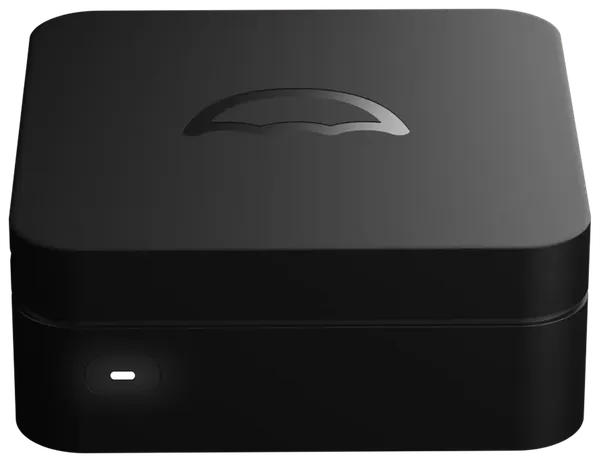
Umbrel Home ($549 at the time of writing) is the easy route: an Intel N150, 16 GB of RAM and an NVMe SSD running umbrelOS (Umbrel offers 1, 2 and 4 TB versions), with Bitcoin Node, mempool and Public Pool in its app store. Install Public Pool, point your Bitaxe at the stratum address it shows, and you are solo mining against your own node with no fee. Block 937,218 came through that same app.
Start9 Server One ($899 at the time of writing) is the more capable machine: an AMD Ryzen 5 6600H with DDR5 memory and a fast NVMe SSD (Start9 builds it with 16 or 32 GB and 2 or 4 TB), wired Ethernet only, running StartOS. Some owners run Public Pool on it too, but it is less of a one-click job than on Umbrel, so check the current StartOS marketplace if solo mining is a main reason to buy it. Both sit in our homelab collection.
What we'd buy
Prices are ours at the time of writing.
- First miner, mostly for fun and learning: a Bitaxe Gamma 602 at $77. It has the lowest power cost per ticket of the three.
- More hashrate from one plug: a NerdQaxe++ at $382, roughly four Bitaxes of hashrate at about the same efficiency. Four separate Bitaxes cost $308, so pick it for tidiness, not odds per dollar.
- Cold room, no tinkering: an Avalon Nano 3S at $300. Treat it as a heater that mines and unplug it when the heating goes off.
- Only one purchase: the node. A Bitaxe plus an Umbrel Home comes to $626, clears our $399 minimum order (a miner on its own doesn't), and gives you fee-free solo mining on hardware you control.
- Paying and keeping: we take Bitcoin, Monero and more than 20 coins in total, with guest checkout and no account; see how to pay. Mine to an address on a hardware wallet from our self-custody range, so a lucky block lands somewhere safe.
Questions and answers
Can a Bitaxe really mine a Bitcoin block?
Yes, but rarely. On 10 July 2026 a Bitaxe averaging about 995 GH/s found block 957,382 through Public Pool. At current difficulty a 1.2 TH/s Bitaxe has about a 1 in 15,000 chance per year.
How much does it cost to run a Bitaxe for a year?
At about 18 W around the clock it uses roughly 158 kWh a year, which is about $24 at $0.15/kWh. Owners report draws between 14 and 18 W depending on settings.
Is solo bitcoin mining at home profitable?
Not on average. At $0.15/kWh the expected value of a Bitaxe, NerdQaxe++ or Avalon Nano 3S is below its electricity cost, and in almost every year the real return is zero. People do it as a lottery, to learn, to support decentralization or for the heat.
Do I need my own Bitcoin node to solo mine?
No. Services such as CKPool solo (2% fee on a found block) and Public Pool (no fee) let you solo mine without a node. Running Public Pool on your own node removes the third party and lets your node choose the block's transactions.
What happens to solo mining odds after the 2028 halving?
The odds depend on difficulty, not the subsidy, so they don't change because of the halving. The prize does: from block 1,050,000 the subsidy falls from 3.125 to 1.5625 BTC plus fees.
Sources
- Bitcoin mining dashboard: difficulty, hashrate and adjustment estimatemempool.space
- Block 957,382 (Public Pool)mempool.space
- Block 937,218 (Public Pool on Umbrel)mempool.space
- Block 924,569 (Solo CK, difficulty reference)mempool.space
- Block 889,975 (Solo CK, difficulty reference)mempool.space
- Controlled supplyBitcoin Wiki
- bitaxeGamma: Bitaxe based on the BM1370 from the S21 Probitaxeorg on GitHub
- Bitaxe Gamma 602 Review: Specs, Features & Buying GuideCryptoMinerBros
- NerdQ hardware repository (NerdQAxe++)shufps on GitHub
- ESP-Miner-NerdQAxePlus firmwareshufps on GitHub
- Avalon Nano 3SCanaan
- Avalon Nano 3S specificationsCanaan Official Shop
- Solo CKPool: anonymous solo bitcoin miningsolo.ckpool.org
- solo.ckpool.org 2% fee solo mining (support thread)BitcoinTalk
- Public Pool web interface and stratum configurationPublic Pool
- Public Pool appUmbrel App Store
- Solo Bitaxe Miner Beats 18,000-Year Odds to Mine Full Bitcoin BlockTheEnergyMag
- Solo Bitcoin Miners Keep Pocketing Full Block Rewards in 2026: Here's HowBitcoin.com News
- BitAxeLuck Pool announcement thread (Stratum V1 address privacy discussion)BitcoinTalk
- Umbrel HomeUmbrel
- Server One - 6600HStart9 Labs
- Public Pool on Start9 NodePaulsCode forum
Prices, fees and specifications were checked on October 5, 2026 and change over time. Product prices are ours at the time of writing.