RTX 5070 Ti vs RX 9070 XT: which to buy in November 2026
The RTX 5070 Ti and RX 9070 XT tie in rasterized games at 1440p, while the RTX 5070 Ti is about 20% faster with ray tracing and has better upscaling and AI support. At about $360 less in late 2026, the RX 9070 XT is the better value for most gamers.

Key takeaways
- In Tom's Hardware's 11-game rasterized suite (June 2026), the RTX 5070 Ti averaged 116.8 fps at 1440p ultra and the RX 9070 XT 116.5 fps.
- TechSpot's 52-game retest in May 2026 found the RTX 5070 Ti 4% faster at 4K, averaging 84 fps to the RX 9070 XT's 81 fps.
- With ray tracing, the RTX 5070 Ti is 19% faster at 1440p and 22% faster at 4K in Tom's Hardware's eight-game suite, and 63% faster in path-traced Doom in TechSpot's test.
- On 26 October 2026 the lowest US prices tracked by Tom's Hardware were $1,229 for the RTX 5070 Ti and $869 for the RX 9070 XT, against launch MSRPs of $749 and $599.
- FSR frame generation still makes only one generated frame per rendered frame, while DLSS 4.5 on RTX 50 cards supports up to 6x Multi Frame Generation.
In the RTX 5070 Ti vs RX 9070 XT matchup, the two cards are tied in normal (rasterized) games at 1440p, and the RTX 5070 Ti is about 4% faster at 4K. The RTX 5070 Ti pulls clearly ahead with ray tracing (about 20%) and path tracing (up to 63% in one test), and it has the better upscaling, frame generation and AI software. The RX 9070 XT costs roughly $360 less at the time of writing, so for most gamers who don't care about path tracing it is the better value.
Below are the specs, November 2026 street prices, benchmark results from two independent reviewers, the state of DLSS 4.5 and FSR Redstone, power draw, drivers and local AI. Our picks by buyer type are at the end.
How do the RTX 5070 Ti and RX 9070 XT specs compare?
Both cards have 16GB of memory on a 256-bit bus and draw around 300W. The big hardware difference is memory: Nvidia uses faster GDDR7, which gives it 40% more bandwidth. AMD makes up for some of that with a 64MB Infinity Cache. Figures come from Nvidia's RTX 5070 family page, AMD's RX 9070 XT page and the spec table in Tom's Hardware's RX 9070 XT review.
| Spec | RTX 5070 Ti | RX 9070 XT |
|---|---|---|
| Architecture | Blackwell | RDNA 4 |
| Shader cores | 8,960 CUDA cores | 4,096 stream processors (64 CUs) |
| Boost clock | 2.45 GHz | Up to 2.97 GHz |
| Memory | 16GB GDDR7, 28 Gbps | 16GB GDDR6, 20 Gbps |
| Memory bus | 256-bit | 256-bit |
| Memory bandwidth | 896 GB/s | 640 GB/s |
| Last-level cache | 48MB L2 | 64MB Infinity Cache |
| AI throughput (maker figure) | 1,406 AI TOPS | 389 TOPS INT8 (779 with sparsity) |
| Board power | 300W | 304W |
| Recommended PSU | 750W | 750W |
| Launch MSRP | $749 (February 2025) | $599 (March 2025) |
Treat the AI TOPS numbers with care. Nvidia quotes its figure with sparsity and low precision, so it is not a like-for-like comparison. The real-world AI gap is covered further down.
What do they cost in November 2026?
Neither card sells near its launch price. The memory shortage that pushed up RAM and SSD prices through 2026 also raised graphics card prices, and the RTX 5070 Ti has been hit hardest. In the Tom's Hardware lowest GPU price tracker (last updated 26 October 2026), the cheapest RTX 5070 Ti in the US was $1,229 and the cheapest RX 9070 XT was $869. That makes the GeForce about 41% more expensive.
Prices kept climbing into November. VideoCardPrices recorded a new RTX 5070 Ti at $1,574.95 on Amazon on 2 November 2026, up from $1,189.99 on 9 October. Its RX 9070 XT page shows $1,049.99 on the same day, up from $814.29 on 9 October. Both trackers follow single listings that change daily, so read them as a range, not a fixed price.
| Price point | RTX 5070 Ti | RX 9070 XT |
|---|---|---|
| Launch MSRP | $749 | $599 |
| Lowest US price, Tom's Hardware (26 Oct 2026) | $1,229 | $869 |
| New on Amazon, VideoCardPrices (2 Nov 2026) | $1,574.95 | $1,049.99 |
| Used on eBay, VideoCardPrices (2 Nov 2026) | $1,399.99 | $899.00 |
| Our price at the time of writing | $911.66 | $759.05 |
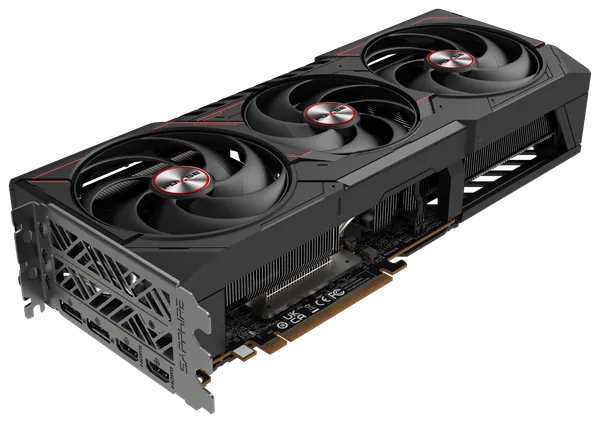
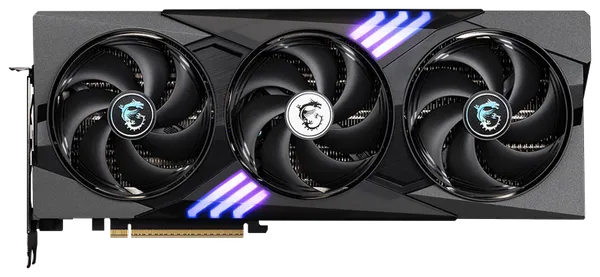
Partner cards cost more than the base models. On the Radeon side we stock the Sapphire Pulse RX 9070 XT ($901.55), the PowerColor Hellhound RX 9070 XT ($873.05) and the Gigabyte RX 9070 XT Gaming OC ($844.55). On the GeForce side there is the MSI RTX 5070 Ti Gaming Trio OC ($1,262.55) and the compact Zotac RTX 5070 Ti Solid SFF OC ($1,509.55). All of them use the same GPU and the same 16GB of memory as the base models, so you are paying for cooling, noise and size, not speed.
RTX 5070 Ti vs RX 9070 XT: which is faster at 1440p and 4K?
Without ray tracing, it's a draw. Two independent test suites with different game lists agree on this.
TechSpot (Hardware Unboxed) retested both cards in 52 games in May 2026 on a Ryzen 7 9800X3D, using GeForce 596.49 and Adrenalin 26.5.2 drivers. At 1440p the RTX 5070 Ti led by 2 fps on average (about 1.4%), with 1% lows of 108 fps versus 107 fps. At 4K it averaged 84 fps to the RX 9070 XT's 81 fps, a 4% lead. TechSpot puts the 4K gap down to the RTX 5070 Ti's higher memory bandwidth.
The Tom's Hardware GPU benchmarks hierarchy (updated 24 June 2026, 11 rasterized games at ultra settings, also on a Ryzen 7 9800X3D) shows the same picture.
| Test (source, games) | RTX 5070 Ti | RX 9070 XT | Difference |
|---|---|---|---|
| 1440p ultra, raster (Tom's Hardware, 11) | 116.8 fps | 116.5 fps | Tie |
| 4K ultra, raster (Tom's Hardware, 11) | 68.6 fps | 65.8 fps | RTX 5070 Ti +4% |
| 1440p average (TechSpot, 52) | +2 fps | Baseline | RTX 5070 Ti +1.4% |
| 4K average (TechSpot, 52) | 84 fps | 81 fps | RTX 5070 Ti +4% |
| 1440p ray tracing (Tom's Hardware, 8) | 66.2 fps | 55.5 fps | RTX 5070 Ti +19% |
| 4K ray tracing (Tom's Hardware, 8) | 36.7 fps | 30.1 fps | RTX 5070 Ti +22% |
Using Tom's Hardware's own 1440p raster averages and its October prices, the RTX 5070 Ti costs about $10.50 per frame and the RX 9070 XT about $7.50 per frame (our calculation). For a 1440p high-refresh monitor and mostly rasterized games, the Radeon gives you the same frame rate for less money.
How big is the ray tracing and path tracing gap?
This is where the RTX 5070 Ti earns its premium. Across Tom's Hardware's eight ray-traced games, it is 19% faster at 1440p and 22% faster at 4K. RDNA 4 closed a lot of the gap AMD had in earlier generations, but it has not closed all of it.
Path tracing, the heaviest form of ray tracing, shows the biggest difference. In TechSpot's 52-game test, Doom with path tracing at 1440p ran at 31 fps on the RTX 5070 Ti, which was 63% faster than the RX 9070 XT. The RTX 5070 Ti also led by 15% in Cyberpunk 2077 with ray tracing at 1440p and by 20% to 24% in F1 25 at Ultra High ray tracing.
It's not one-sided, though. TechSpot found the RX 9070 XT 12% to 13% faster in Pragmata with ray tracing on, and it tied or beat the RTX 5070 Ti in Resident Evil Requiem and Monster Hunter Wilds with ray tracing enabled. Lighter ray tracing, the kind built for consoles that use AMD hardware, runs well on both cards. If you plan to play path-traced games (Cyberpunk 2077, Alan Wake 2, Doom: The Dark Ages, Black Myth: Wukong), the GeForce is the safer choice.
DLSS 4.5 or FSR Redstone: which upscaling and frame generation is better?
Both cards now have AI upscaling, which matters more than a few percent of raw speed. Nvidia is still ahead on features and game support.
Nvidia DLSS 4.5. According to Nvidia's CES 2026 announcement, DLSS 4.5 added a second-generation transformer model for super resolution that works in more than 400 games and apps through the driver override. Multi Frame Generation, which inserts up to three generated frames per rendered frame, was in more than 250 games and apps, and more than 800 titles use some RTX technology. DLSS 4.5 also added 6x Multi Frame Generation and Dynamic Multi Frame Generation, which changes the multiplier on the fly to hit a target frame rate. Both arrived in spring 2026 and are exclusive to RTX 50 cards such as the RTX 5070 Ti.
AMD FSR Redstone. FSR Redstone is AMD's suite of ML features for RX 9000 cards: ML upscaling (formerly FSR 4), ML frame generation, Ray Regeneration and Radiance Cache. When PC Gamer tested it at launch in December 2025, it called the upscaler "very good" and the frame generation possibly better. Frame generation worked in 31 games at that point, and Ray Regeneration in one. FSR 4.1 arrived in March 2026 with sharper detail in motion. AMD said at Computex 2026 that FSR 4 and its other neural rendering features were in more than 300 games.
There are two weak spots for AMD. First, FSR frame generation still makes only one generated frame per rendered frame (2x). As of PC Gamer's report on 23 October 2026, AMD had still not announced a multi frame generation mode. Second, Hardware Unboxed found uneven frame pacing with FSR frame generation in August 2026 testing. AMD says it is working on a fix, but as of that 23 October report it had given no firm timeline, and independent retests were still pending at the time of writing.
In practice: on a 1440p 240Hz or 4K 240Hz monitor, the RTX 5070 Ti's 3x to 6x frame generation can fill high refresh rates that the RX 9070 XT can only reach at 2x. Frame generation adds latency, so it works best when the base frame rate is already around 60 fps or higher. It does not make a slow card feel fast.
Which uses less power, and which has better drivers?
The ratings are almost the same (300W versus 304W), but in testing the RTX 5070 Ti draws less. TechSpot's May 2026 retest found the RX 9070 XT typically uses about 20% more power than the RTX 5070 Ti for roughly the same frame rate. Tom's Hardware's launch review reached the same conclusion: the RTX 5070 Ti delivered more performance while drawing less power across its suite.
Club386 measured total system power at 470W with a factory-overclocked Sapphire Nitro+ RX 9070 XT and 432W with a stock MSI RTX 5070 Ti Ventus 3X. Club386 notes that part of that 37W gap comes from the overclock.
For most desktops, a 750W power supply runs either card comfortably, so the difference shows up mostly as heat and fan noise. It matters more in small cases, where the cooler-running card is easier to live with.
Are the drivers and software stable in 2026?
Both companies had driver trouble this year. In late October Nvidia shipped hotfix 621.12 to fix video playback freezes and black screens that its 621.01 driver caused on some RTX 50 cards. AMD's open problem is the FSR frame generation pacing described above, which has not been confirmed fixed.
Day to day, neither card is a problem. Nvidia's advantage is the reach of its software: the Nvidia app's DLSS override, Reflex in more competitive shooters, and wider support in streaming and creative apps. AMD's Adrenalin is a capable all-in-one tool with overclocking, recording and per-game FSR settings built in. On Linux, the RX 9070 XT is the easier card because its open-source driver ships with mainstream distributions.
Which is better for local AI and LLMs?
The RTX 5070 Ti, clearly. CUDA is still the default target for almost every AI tool, and the memory bandwidth advantage helps with token generation. In Club386's head-to-head, the RTX 5070 Ti was more than twice as fast as the RX 9070 XT in UL Procyon's Llama 3.1 text generation test. For image generation, Tom's Hardware's launch review found that even an RTX 4070 beat the RX 9070 XT in Procyon's SDXL test, although AMD led in the older SD 1.5 test. We could not find an independent 2026 SDXL or Flux head-to-head between these two cards that we trust.
AMD's software has improved, but it still lags behind:
- Windows: AMD's ROCm 7.2.1 support matrix lists the RX 9070 XT (gfx1201) on Windows 11, but only for PyTorch 2.9. AMD notes that the full ROCm stack is not yet supported on Windows.
- Ollama: Ollama's GPU documentation lists the RX 9070 XT for ROCm on Linux, but not on Windows. On Windows it falls back to the Vulkan backend.
- llama.cpp and LM Studio: both run on the RX 9070 XT through Vulkan or ROCm and work well for everyday chat models.
Both cards have 16GB, so they fit the same models. That covers 7B to 14B models at 4-bit or 8-bit quantization with room for context, and OpenAI's gpt-oss-20b, which is designed to run in 16GB. A 32B model at 4-bit needs more than 16GB and spills into system RAM, which slows it down sharply. Our guide to how much VRAM you need for local LLMs covers the sizes in detail. If AI is the main job, look at a 32GB card such as the Radeon AI Pro R9700 or a machine from our AI workstations range.
Which card holds its value and is easier to find?
Both cards are selling for more used than their launch prices. VideoCardPrices showed used eBay listings at $1,399.99 for an RTX 5070 Ti and $899 for an RX 9070 XT on 2 November 2026. GeForce cards tend to resell faster because more buyers want CUDA and DLSS. But the RTX 5070 Ti also carries the bigger premium today, and on those November listings the used RTX 5070 Ti cost $500 more than the used Radeon, so don't count on resale to make up the difference.
Supply is tight for both. The RTX 5070 Ti has risen further from its launch price (64% above MSRP in Tom's Hardware's October data, against 45% for the RX 9070 XT), and both kept climbing into November as graphics memory stayed scarce. If you find either card at a fair price, buying now is safer than waiting for a drop that may not come before 2027.
If you would rather skip the parts hunt, the Juniper RTX 5070 Ti gaming PC ($2,906.99) comes built and tested. Our gaming PCs page lists the other configurations. To see where these cards sit against the RTX 5080 and 5090, read our RTX 5090 vs 5080 vs 5070 Ti buying guide.
What we'd buy
- 1440p gaming on a budget, mostly rasterized games: the Sapphire Pulse RX 9070 XT or the base RX 9070 XT. Same frame rate as the RTX 5070 Ti for about $360 less at October street prices.
- Path tracing, 4K with frame generation, or a 240Hz-plus monitor: the MSI RTX 5070 Ti Gaming Trio OC. Up to 63% faster in path tracing, plus DLSS 4.5 and 6x Multi Frame Generation.
- Local AI, Stable Diffusion or CUDA work on Windows: the RTX 5070 Ti. Don't buy the RX 9070 XT for AI unless you run Linux and are happy with Vulkan or ROCm.
- Small form factor builds: the Zotac RTX 5070 Ti Solid SFF OC, a compact card on the GPU that draws less power.
- Linux gaming: the RX 9070 XT, for its open-source driver that works out of the box.
- A complete system: the Juniper RTX 5070 Ti gaming PC, paid in crypto (see how to pay).
- Every order ships insured in an unbranded box, free on orders of $999 or more. See our shipping page for details.
Questions and answers
Is the RX 9070 XT as good as the RTX 5070 Ti?
In rasterized games, yes: TechSpot's 52-game test found the RTX 5070 Ti only 1.4% faster at 1440p. The RTX 5070 Ti is clearly better with heavy ray tracing, path tracing and AI workloads.
Is the RTX 5070 Ti worth $360 more than the RX 9070 XT?
Only if you play path-traced games, want DLSS Multi Frame Generation on a high refresh monitor, or run CUDA AI tools. For mostly rasterized gaming at 1440p, the same frame rates cost about 30% less on the Radeon at October 2026 prices.
Does the RX 9070 XT support FSR 4?
Yes. FSR 4 ML upscaling, now part of FSR Redstone, was built for RX 9000 cards, and AMD said in mid-2026 that its neural rendering features were in more than 300 games.
Can a 16GB GPU run local LLMs?
Yes, 16GB runs 7B to 14B models at 4-bit or 8-bit quantization and OpenAI's gpt-oss-20b. A 32B model at 4-bit needs more than 16GB and slows down sharply when it spills into system RAM.
Which card uses less power, RTX 5070 Ti or RX 9070 XT?
The RTX 5070 Ti. Both are rated at about 300W, but TechSpot measured the RX 9070 XT drawing roughly 20% more power for similar frame rates.
Sources
- GeForce RTX 5070 Ti vs. Radeon RX 9070 XT (52 game benchmark)TechSpot
- GPU Benchmarks HierarchyTom's Hardware
- Lowest GPU prices trackingTom's Hardware
- NVIDIA RTX 5070 Ti price historyVideoCardPrices
- AMD RX 9070 XT price historyVideoCardPrices
- GeForce RTX 5070 FamilyNVIDIA
- AMD Radeon RX 9070 XTAMD
- AMD Radeon RX 9070 XT and RX 9070 review: Excellent value, if supply is goodTom's Hardware
- CES 2026: NVIDIA GeForce RTX announcementsNVIDIA
- FSR Redstone tested: AMD's long awaited AI-powered frame gen delivers the goods but it's very late to marketPC Gamer
- AMD's FSR 4 passes a new milestone: AI-powered super resolution in 300 gamesTweakTown
- AMD says it's working on FSR's frame pacing issues, but there's still conspicuously no mention of Multi Frame GenerationPC Gamer
- Nvidia GeForce RTX 5070 Ti vs. AMD Radeon RX 9070 XTClub386
- Nvidia fixes RTX 50 video freezes and black screens with hotfix 621.12Mixed
- Windows support matrices by ROCm versionAMD ROCm documentation
- Hardware support (GPU)Ollama
Prices, fees and specifications were checked on November 9, 2026 and change over time. Product prices are ours at the time of writing.